Imagine the power goes out at your house or work. You need backup power fast, but you do not want to spend too much money. Used Second-hand Generators can help you save up to 50% compared to new ones. They are often ready to use right away. Here is how they compare:
Aspect | Used Generators | New Generators |
|---|---|---|
Cost Savings | Higher price | |
Availability | Immediate shipment | Possible delays |
Durability | Proven, low-hour units | Brand new |
Warranty | Limited or none | Standard warranty |
You can find many trusted brands and models. This makes it easy to pick a generator that fits your needs and budget.
Key Takeaways
Used second-hand generators can cost half as much as new ones. They still give you steady power. Check the generator’s shape, how many hours it has run, and its service records. This helps make sure it will last a long time. Pick the right size and fuel type for your needs. This can help you save money on fuel and repairs later. Buy from sellers you trust. Ask them to do load tests to show the generator works well in real situations. Take care of your generator and do regular check-ups. This keeps it safe, working well, and ready when you need it.
Used Second-hand Generators and Reliability
Durability Factors
You may wonder if Used Second-hand Generators last as long as new ones. Many come from factories or big job sites. Brands like Generac, Kohler, Cummins, Caterpillar, MTU, Multiquip, and Wacker Neuson make them strong. They use tough metals and heavy-duty parts. This helps the generators run for thousands of hours without stopping.
Check how well the generator is built before buying. Industrial generators have thick frames and good cooling systems. These features help them work in bad weather or dusty places. Some can run for 20,000 hours or more with good care. You can find Used Second-hand Generators in many sizes. Some are small for homes. Others are big for factories or building sites.
Tip: Always check for rust, leaks, or old parts. A clean generator will last longer and have fewer problems.
Performance Over Time
Performance is important when you need backup power. Used Second-hand Generators can give strong and steady power if they have low hours and good care. Running hours show how much a generator has worked. Fewer hours mean less use and more life left.
Ask for the generator’s service history. Oil changes, new filters, and checkups keep the engine strong. Even old generators from good brands can work well if cared for. Many people find that a used generator with 2,000 to 5,000 hours can last for years.
You can pick from many brands and sizes. Some use diesel. Others use natural gas or propane. This helps you choose what works best for you. When you buy a generator that has worked well before, you get peace of mind and steady power.
Cost Savings
Price Comparison
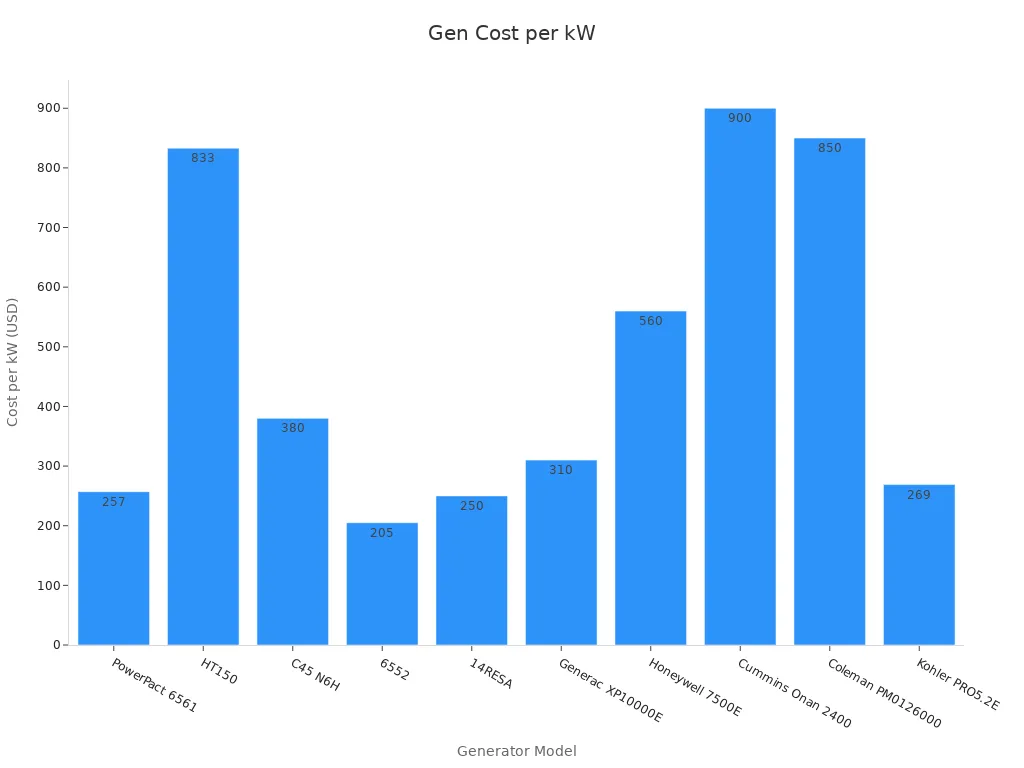
When you check generator prices, you notice a big gap. New industrial generators cost a lot more than used ones. Most new models cost between $300 and $450 for each kilowatt. The price changes with size, brand, and features. For example, a 50 kW generator from a top brand costs about $19,000. That is around $380 for each kilowatt. Smaller models, like a 7 kW unit, might cost $1,800. That is about $257 for each kilowatt. Some brands, like Generac, Kohler, and Cummins, charge more. They have extra features and better support.
Used Second-hand Generators are much cheaper. You can save up to half the price compared to new ones. If a generator has more hours or looks worn, the price drops even more. Here is a table that shows how prices change by brand and size:
Brand/Model | Power (kW) | Price (USD) | Approximate Cost per kW (USD) |
|---|---|---|---|
PowerPact 6561 | 7 | 1,800 | ~257 |
HT150 | 150 | 125,000 | ~833 |
C45 N6H | 50 | 19,000 | 380 |
6552 | 22 | 4,500 | ~205 |
14RESA | 14 | 3,500 | 250 |
Generac XP10000E | 10 | 3,100 | 310 |
Honeywell 7500E | 7.5 | 4,200 | 560 |
Cummins Onan 2400 | 2 | 1,800 | 900 |
Coleman PM0126000 | 6 | 5,100 | 850 |
Kohler PRO5.2E | 5.2 | 1,400 | 269 |
You can also see the price differences in this chart:
Tip: Pick a used generator with low hours and good service records. You will get more for your money.
Ownership Costs
Buying a generator is not the only cost. You also pay for fuel, repairs, and maintenance. If you pick the right size, you save on fuel. Running a generator at about 80% load uses less fuel than at 10%. This means you spend less on fuel over time.
Running hours are important, too. If you use your generator only when needed, you lower the hours. This means you wait longer between oil changes and other work. Some people use batteries with their generators. This lets the engine run less and at higher loads. It saves fuel and makes the generator last longer.
Here is a table that explains how you can save money by using your generator the right way:
Aspect | Explanation | Economic Benefit for Second-Hand Generator Users |
|---|---|---|
Engine Load and Fuel Economy | Operating an engine at low load (e.g., 10%) results in significantly higher fuel consumption than at optimal load (~80%). | Properly sizing the generator to match load improves fuel economy, reducing fuel costs. |
Running Hours Impact | Continuous low-load operation increases maintenance costs and reduces engine life. | Reducing running hours through intermittent operation extends engine service intervals, lowering maintenance expenses. |
Hybrid Battery-Generator Systems | Using battery storage allows the engine to run intermittently at higher loads rather than continuously at low loads. | Decreases fuel consumption and maintenance costs by reducing running hours and improving load profile. |
Maintenance Cost Considerations | Fuel consumption alone does not capture total operational costs; maintenance intervals, parts, and labor costs are significant. | Extended service intervals and optimized operation reduce overall ownership costs. |
Application to Second-Hand Generators | These principles apply equally to second-hand generators, where proper sizing and hybrid operation can enhance economic benefits. | Lower operational and maintenance costs improve the value proposition of second-hand units. |
If you choose a generator that fits your needs and keep it in good shape, you save a lot over time. Used Second-hand Generators let you get steady power without paying for a new one. You also spend less on repairs and fuel if you use your generator the right way.
Buying Guide
Inspection Tips
When you check Used Second-hand Generators, look closely at everything. Start by looking for rust, dents, or leaks on the outside. Check the engine for oil or coolant leaks. Use the hour meter to see how long it has run. Fewer hours usually mean less use. Test all safety features like automatic shut-off and transfer switches. Make sure they work right.
You can use this table to help you check the generator:
Key Factor | What to Check |
|---|---|
Age and Usage | Year made, hour meter reading |
Engine Condition | Oil level, leaks, noise, and vibration |
Safety Features | Automatic shut-off, transfer switch |
Power Output | Matches your needs, runs well under load |
Fuel Type | Diesel, gas, propane—choose what fits your situation |
Portability | Wheels or stationary base |
Compliance | Meets local codes and certifications |
Tip: Ask for a load test. This test shows if the generator works well under real use.
Service Records
Always ask for service records before you buy. These records show how the generator was taken care of. Look for logs with oil changes, filter swaps, and repairs. Good records have dates, names, and details for each service. Maintenance logs help you see if there are repeated problems or missed checkups.
A generator with good records usually has fewer problems. Some sellers use digital logs to track service. These make it easy to see the full history. If you see regular checks and load tests, the generator is likely in good shape.
Where to Buy
Buy Used Second-hand Generators from trusted sellers. Reputable dealers and brand sellers offer good units and support. Online sites and special marketplaces have many choices, but check reviews first. Look for warranties or certifications if you can.
You can also ask questions in online forums like Reddit. Other buyers share tips and stories. Getting a pro to install and maintain your generator keeps it safe and working. Always pick a generator with the right power and features for your needs.
Addressing Concerns
Reliability Myths
Some people say Used Second-hand Generators are not safe. Others think they are not reliable. But real tests and stories show this is not true. Here are some facts:
Groups like Underwriters Laboratory and the FDA test generator safety and strength.
Hydroxyl generators passed hard safety tests and got FDA approval as a medical device.
Experts use generators to protect things, run stores, and clean school lockers without trouble.
Some myths say you need special places or that all generators are the same. Studies prove these ideas are wrong.
Note: Used Second-hand Generators can work safely in homes and businesses. They also work during repairs. If you take care of them, they can be as good as new ones.
Maintenance Advice
You can keep your generator working with regular care. Check it often and follow a schedule to find problems early. Make a checklist for your generator. Add oil changes, filter swaps, and leak checks to your list. Many experts say to use a system to track repairs and tasks.
Follow these steps for best results: 1. Run the generator once a week with no load. Look for warning lights, check fuel, and look for leaks. 2. Each month, check coolant, oil, and battery. 3. Every six months, check belts, cables, exhaust, and controls. 4. Change oil and filters every year. Clean the generator and test it with a load. 5. Write down all the work you do.
Preventive care saves money on repairs. It also keeps your generator ready when you need it.
Parts and Support
You might worry about finding parts for Used Second-hand Generators. Big brands like Generac, Cummins, and Caterpillar have good support. They also make it easy to get parts. Many dealers and online shops sell filters, belts, and other parts. Local shops and trained workers can help you too.
Brand | Parts Availability | Support Options |
|---|---|---|
Generac | High | Dealers, online, local |
Cummins | High | Dealers, online, local |
Caterpillar | High | Dealers, online, local |
Kohler | High | Dealers, online, local |
Multiquip | Medium | Dealers, online |
If you pick a well-known brand, you will find parts and help easily.
Who Benefits
Homeowners
You want your home to be safe during blackouts. Used Second-hand Generators give backup power for less money. Many people pick small portable or standby models. These generators use gasoline, propane, or natural gas. You can choose the right size for your needs. A 5 kW unit runs lights and a few appliances. A 20 kW unit can power your whole house.
Tip: Pick a generator that covers your main needs. Smaller units use less fuel and cost less to run.
Small Businesses
Small businesses need power to keep working. Used Second-hand Generators help stop expensive shutdowns. There are many models with different power and fuel types. Diesel and natural gas units are good for shops and restaurants.
You can save up to 50% over new ones.
Certified dealers check and fix these generators for you.
Fast delivery means you get power quickly.
You can pick the right size and fuel for your business.
Always check the age, hours, and service records before buying.
Used generators get full checks and repairs. Dealers make sure each one is ready to use. This helps you feel safe and keeps your business open.
Construction Sites
Construction sites need strong and flexible power. Used Second-hand Generators work for small and big jobs. You can pick portable diesel units for far-away sites. Bigger models are good for large projects. Some sites use hybrid systems with solar and diesel. This saves fuel and lowers costs.
Project Type | Generator Type | Main Benefit |
|---|---|---|
Urban High-Rise | Diesel | Reliable, steady power |
Remote Infrastructure | Portable diesel | Easy to move, durable |
Eco-Friendly Development | Hybrid solar + diesel | Lower fuel use, less pollution |
Michael Andrews, a construction expert, says, “Think about the total cost, not just the price. Good planning with used generators saves money and keeps your project moving.
You now know that Used Second-hand Generators offer reliable power and real savings. You can find strong brands, save money, and get the right size for your needs. Always check the condition and service records before you buy. Take time to research and inspect each option. When you make smart choices, you enjoy dependable power for less.
FAQ
How do you know if a used generator is reliable?
Check the service records and running hours. Look for signs of good care, like regular oil changes. Ask for a load test. Trusted brands and clean units often last longer.
What size generator do you need for your home?
List your main appliances and their wattage. Add the total. Choose a generator with a little extra power. For most homes, a 5 kW to 20 kW unit works well.
Can you get parts for older generators?
Most big brands keep parts in stock for years. You can find filters, belts, and other parts online or at local dealers. Always check part availability before you buy.
Is it safe to use a second-hand generator?
Yes, if you inspect it well and follow safety rules. Make sure the generator has working safety features. Place it outside, away from windows. Never use it indoors.
 English
  Portuguese (Portugal)
  Russian
  Arabic
  Portuguese (Brazil)
  Vietnamese
  Spanish
  Estonian
  Bulgarian
  Italian
  Indonesian
  French
  Turkish